
You know your child best… and are their greatest strength and resource.
When we Rethink Therapy, we see therapy happens everywhere — not just at Five Counties Children’s Centre with a clinician/staff member, but all around us!
Small actions with your child every day build connection, confidence and their abilities for life. These actions and interactions happen… at home… at play… all day… every way.
You’ve got this… and we can help!

Family. Friends. Fun. Fitness. Functioning. Future.
 At Five Counties, these F-Words for Child Development keep us focused on what matters most — your child’s everyday life, strengths and goals. The F-Words help families and professionals work together to build abilities for life .
As we Rethink Therapy, let’s keep the F-Words in mind to guide us.
The F-Words Framework is inspired by decades of research and developed by McMaster University’s CanChild Research Centre. The F-Words work, because they move us from a medical model of “fixing” kids to a strength-based approach that promotes health and development using all aspects of a child’s life.
Each F-Word speaks to a different part of a child’s life. When combined together, the F-Words can help to:
- Celebrate a child’s strengths.
- Guide families as to enhance their child’s growth and happiness, while supporting a child’s unique needs and goals for treatment.
- Build a child’s abilities for life.
 Let’s spell out the F-Words to see what they mean for your child and family.
Each F-Word covers a different part of a child’s life. Let’s explore each one to see what it means for you and your child — and how you can put it to work to support your child’s treatment journey.
Rethink Therapy. You’ve got this… we can help!

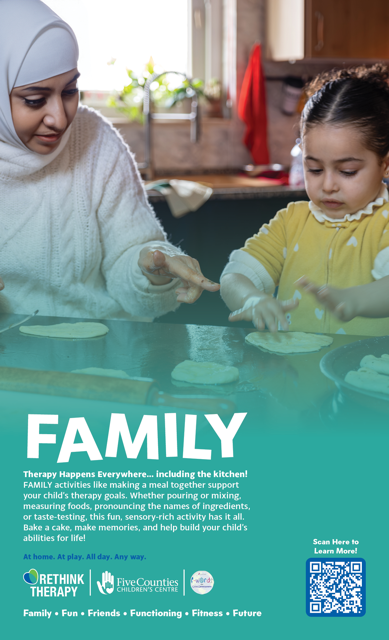 Family represents a child’s essential ‘environment’ (“My family knows me best and I trust them. Listen to the, talk to them, hear them and respect them”).
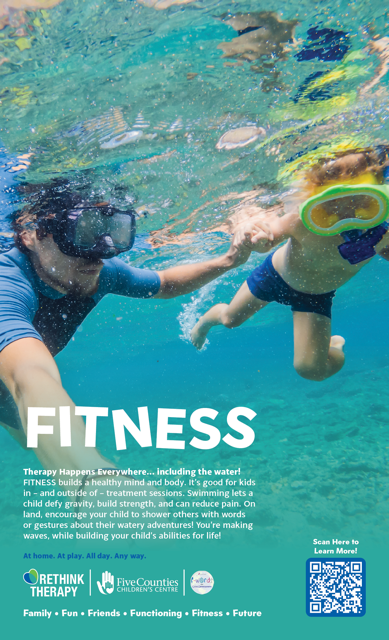 Fitness describes a child’s physical and mental well-being (“Everyone needs to stay fit and healthy, both physically and mentally. Help me find ways to do this.”)
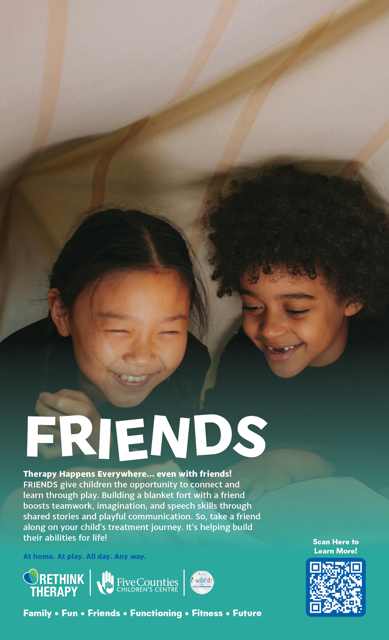 Friends refer to a child’s relationship with others their own age. (“Having friends is important. Please give me opportunities to make friends.”
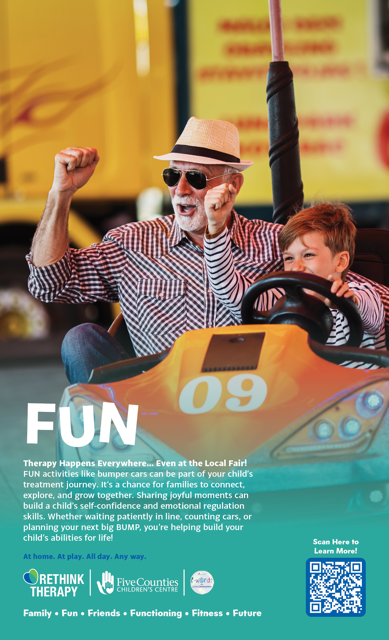 Fun includes activities a child likes doing. (“Life is about fun and play. Please help me do the activities that I find the most fun.”)
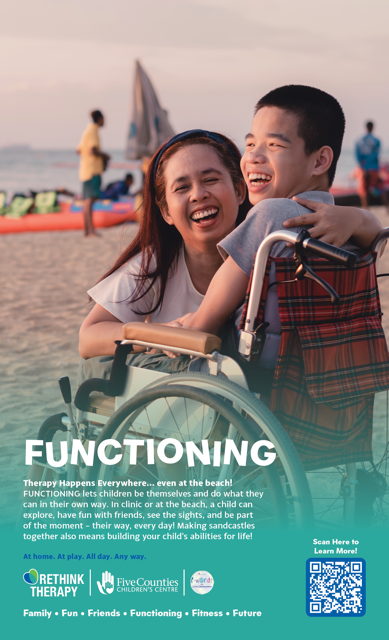 Functioning is a child’s strengths and way of doing things. (“I may do things differently, but I can do them. How I do it isn’t important; please let me try.”)
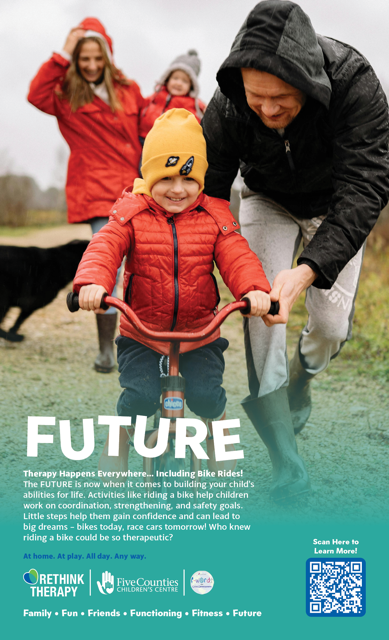 Future is a child’s expectations and dreams for the future. (“I am growing up every day, so please find ways for me to participate and be included in my community.”